Tap a preview page to see it larger.
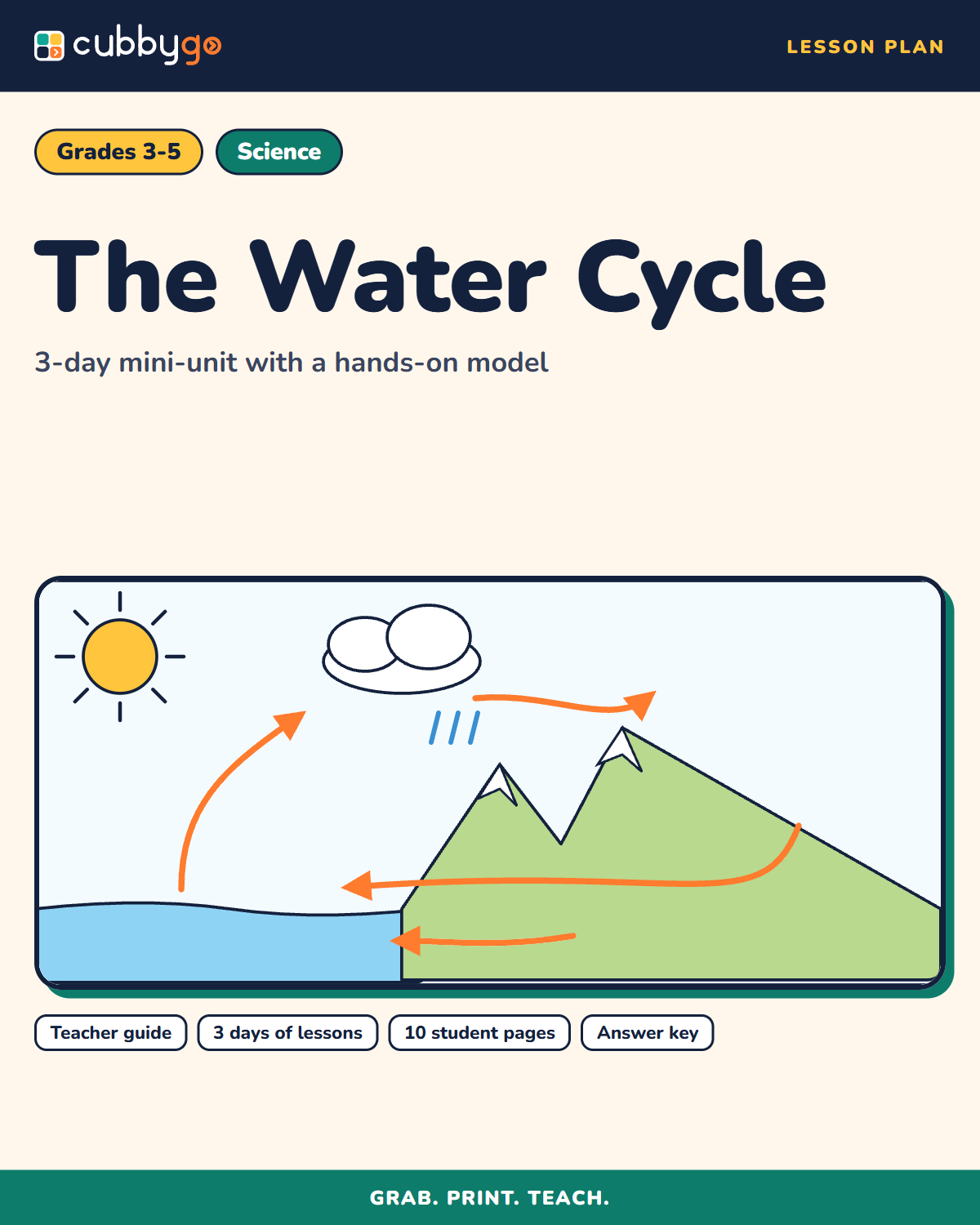
The Water Cycle: Model and Explain
A 3-day mini-unit with a hands-on bag model
Instant PDF download · 20 pages · 864 KB. Print as many copies as you need for your own classroom.
Not what you expected? Full refund within 30 days.
About this resource
A complete three-day science mini-unit on the water cycle. Students read a short story of one water drop, label the diagram, build a working water cycle model in a zip-top bag, record observations, put the steps in order, connect the cycle to states of matter, and explain it in writing.
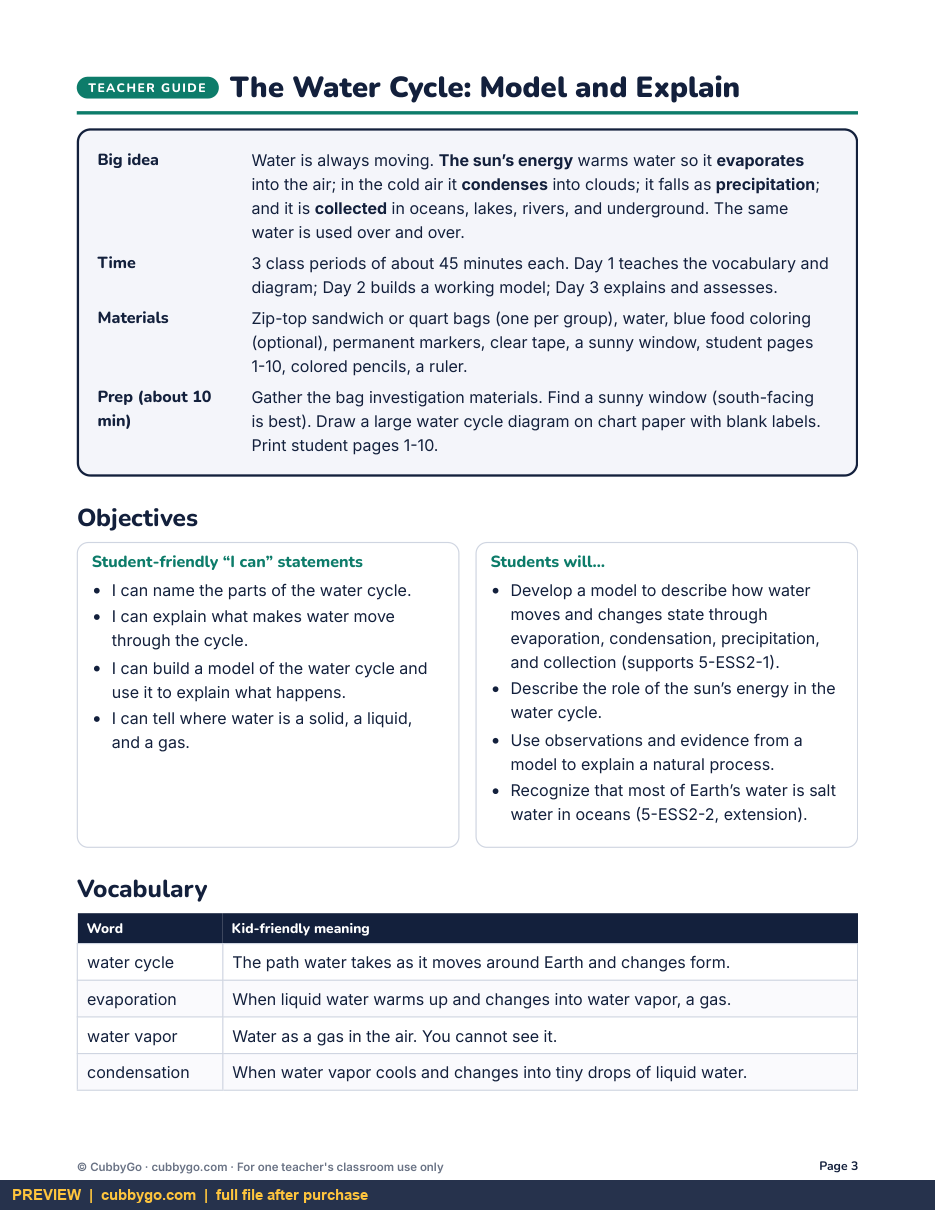
The Teacher Guide gives a day-by-day plan, notes for the bag investigation, common misconceptions (like “clouds are made of vapor”), differentiation, and a rubric.
Uses simple, inexpensive materials: zip-top bags, water, and a sunny window.
Why teachers use it
- Three complete days of lessons with a hands-on investigation
- Low-cost materials: bags, water, a sunny window
- Fact-checked content with accuracy notes for teachers
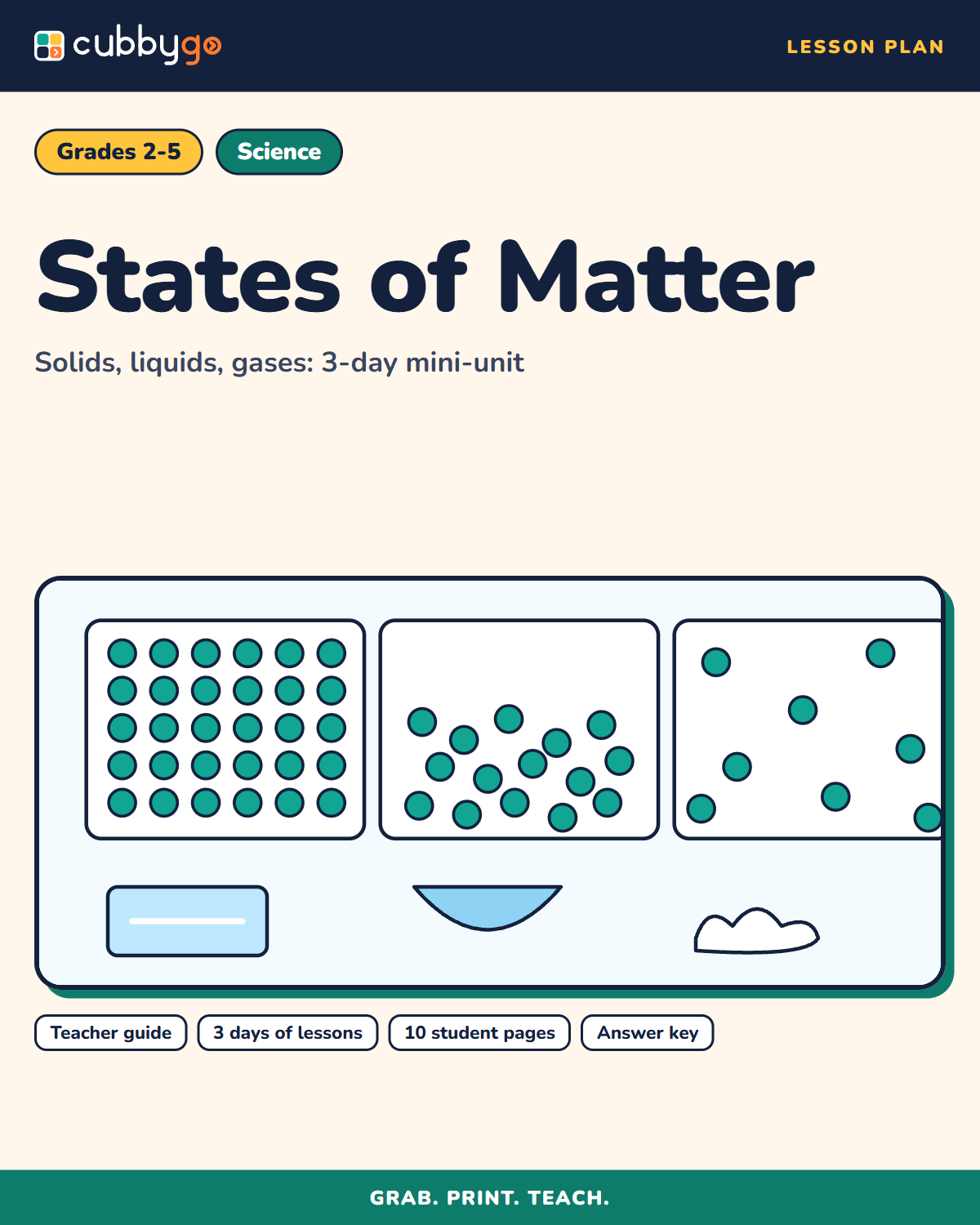
- Connects the water cycle to states of matter
- Observation record, sequencing, true/false, and exit ticket
Questions
What grades is it for?
Grades 3-5. It supports NGSS 5-ESS2-1 and is also a good fit for 3rd and 4th grade earth science units.
What do I need for the bag model?
Zip-top bags, a little water, tape, markers, and a sunny window. Blue food coloring is optional.
Can I teach it in fewer days?
Yes. Day 1 stands alone as a vocabulary and diagram lesson; the bag investigation takes two periods.
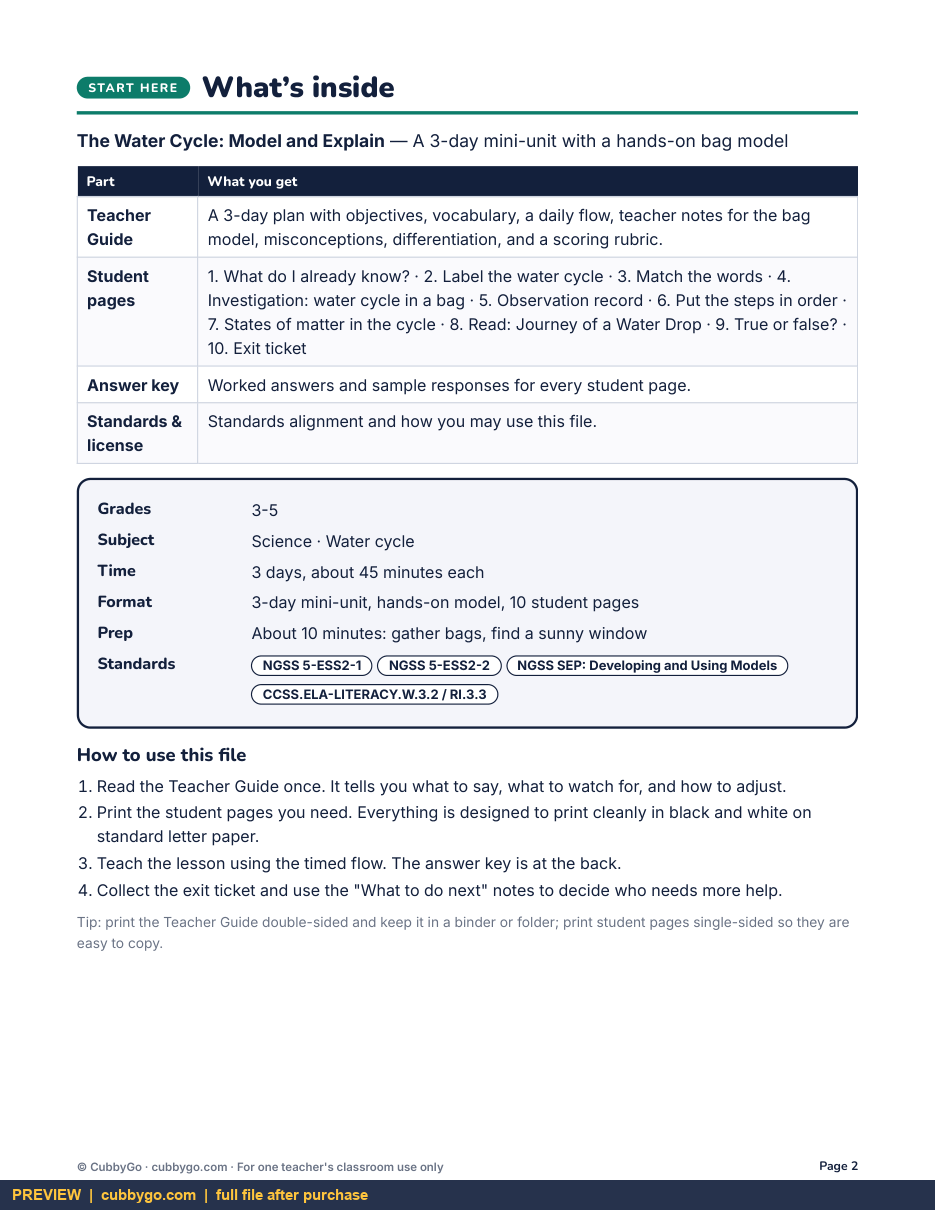
What’s inside
- Teacher Guide with three-day flow, teacher notes, and rubric
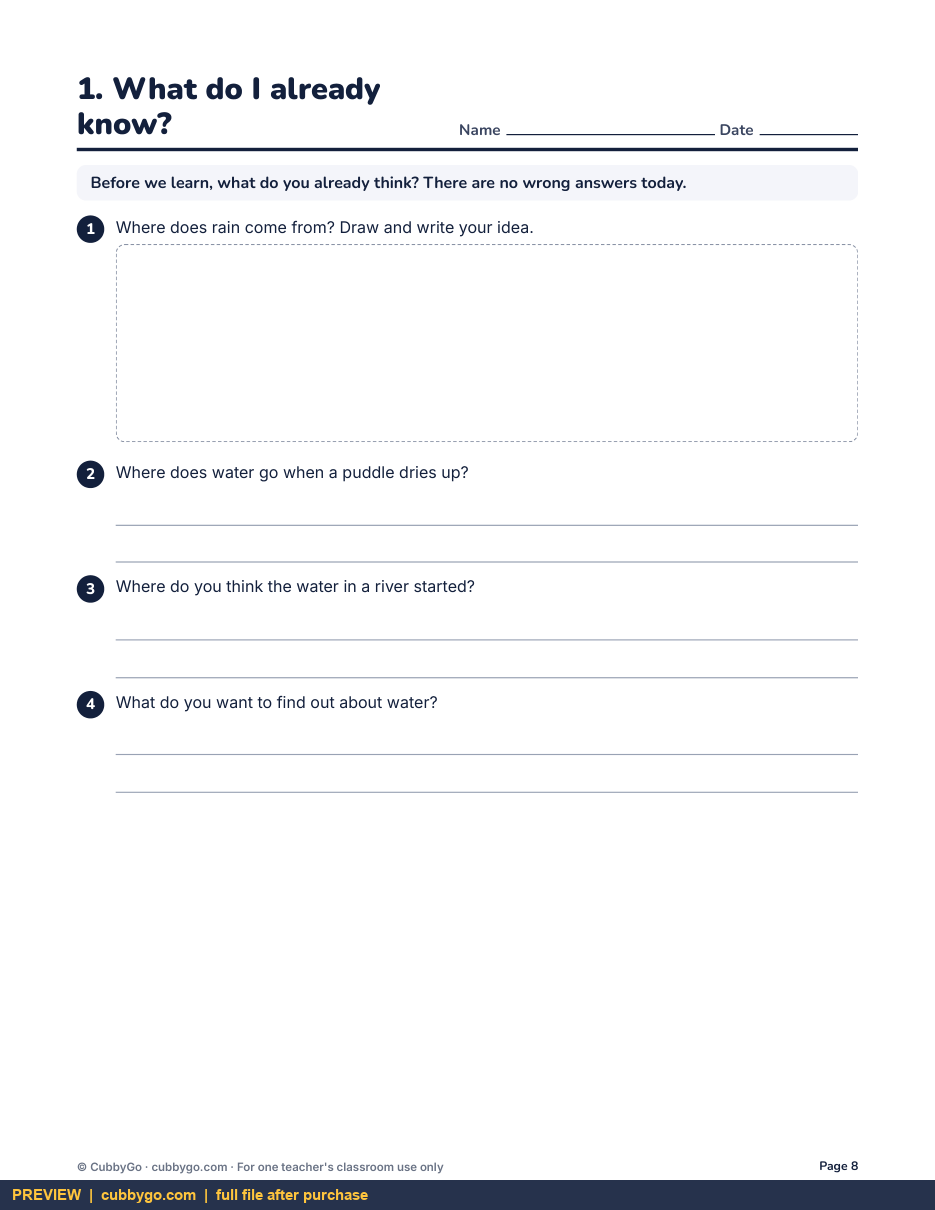
- Page 1: What do I already know?
- Page 2: Label the water cycle
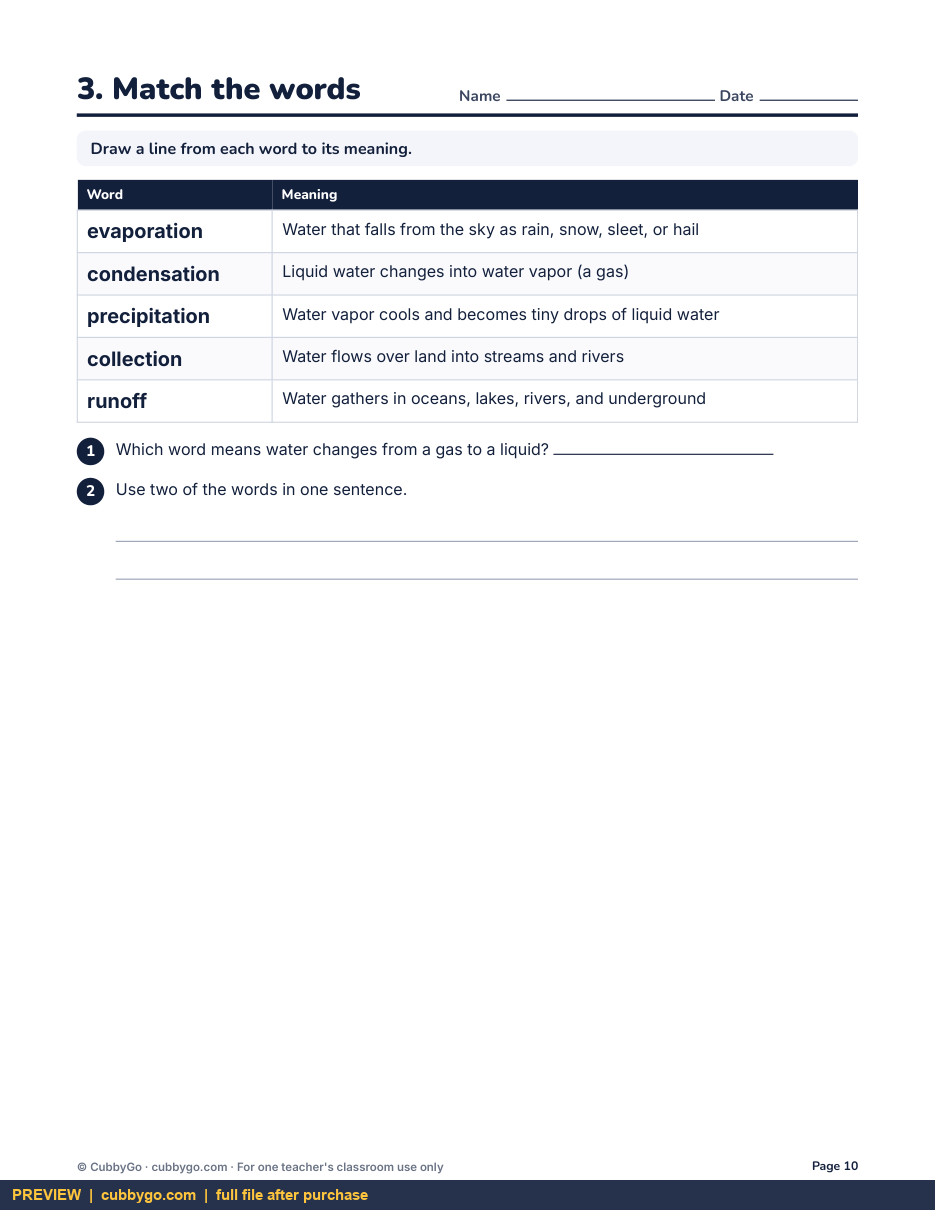
- Page 3: Match the words
- Page 4: Investigation: water cycle in a bag
- Page 5: Observation record
- Page 6: Put the steps in order
- Page 7: States of matter in the cycle
- Page 8: Read “The Journey of a Water Drop”
- Page 9: True or false?
- Page 10: Exit ticket (two versions)
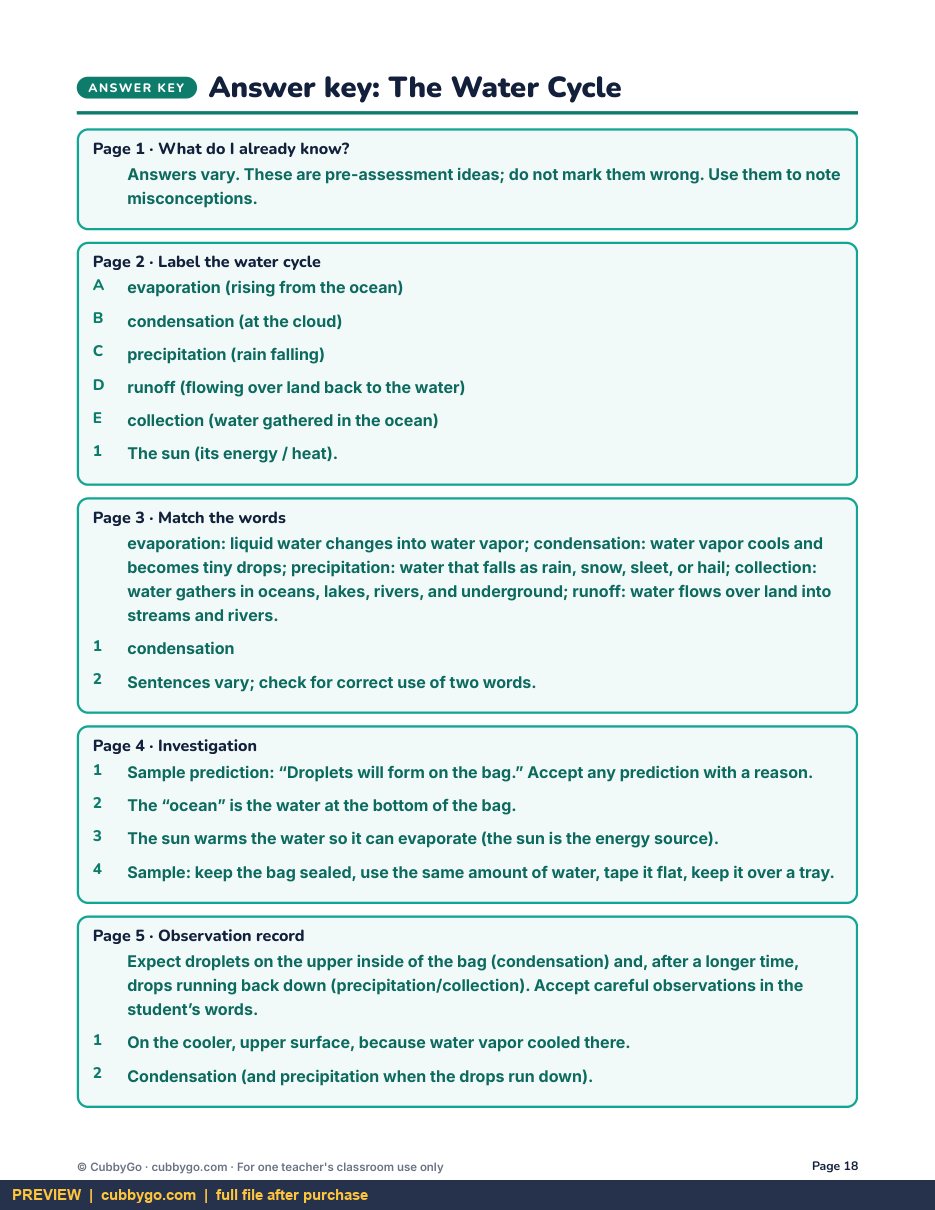
- Answer key and standards page
Standards
Always check your own state and district standards. These are the common standards this resource was written against.