Tap a preview page to see it larger.
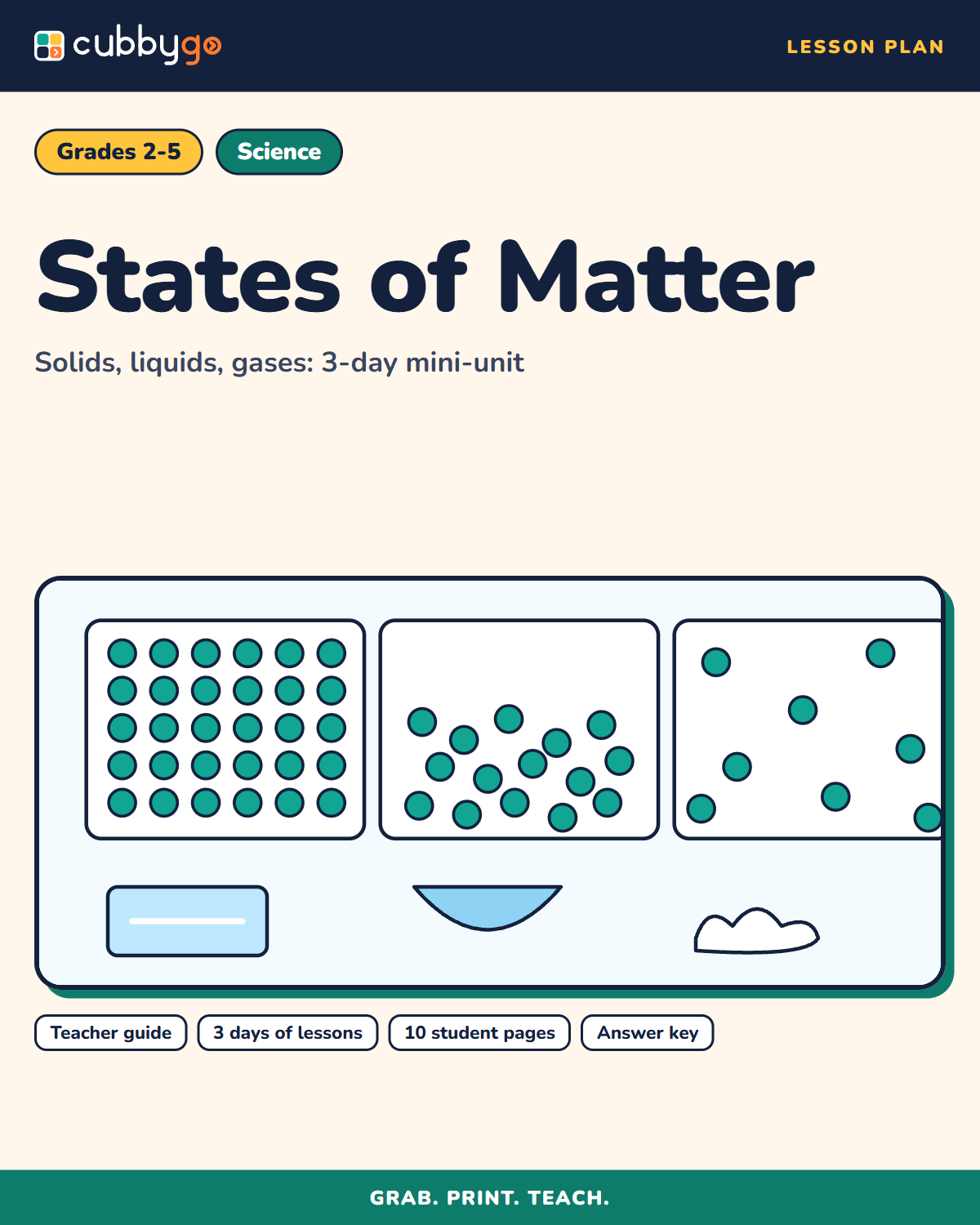
States of Matter: Solids, Liquids, Gases
A 3-day mini-unit with station investigations and particle models
Instant PDF download · 21 pages · 927 KB. Print as many copies as you need for your own classroom.
Not what you expected? Full refund within 30 days.
About this resource
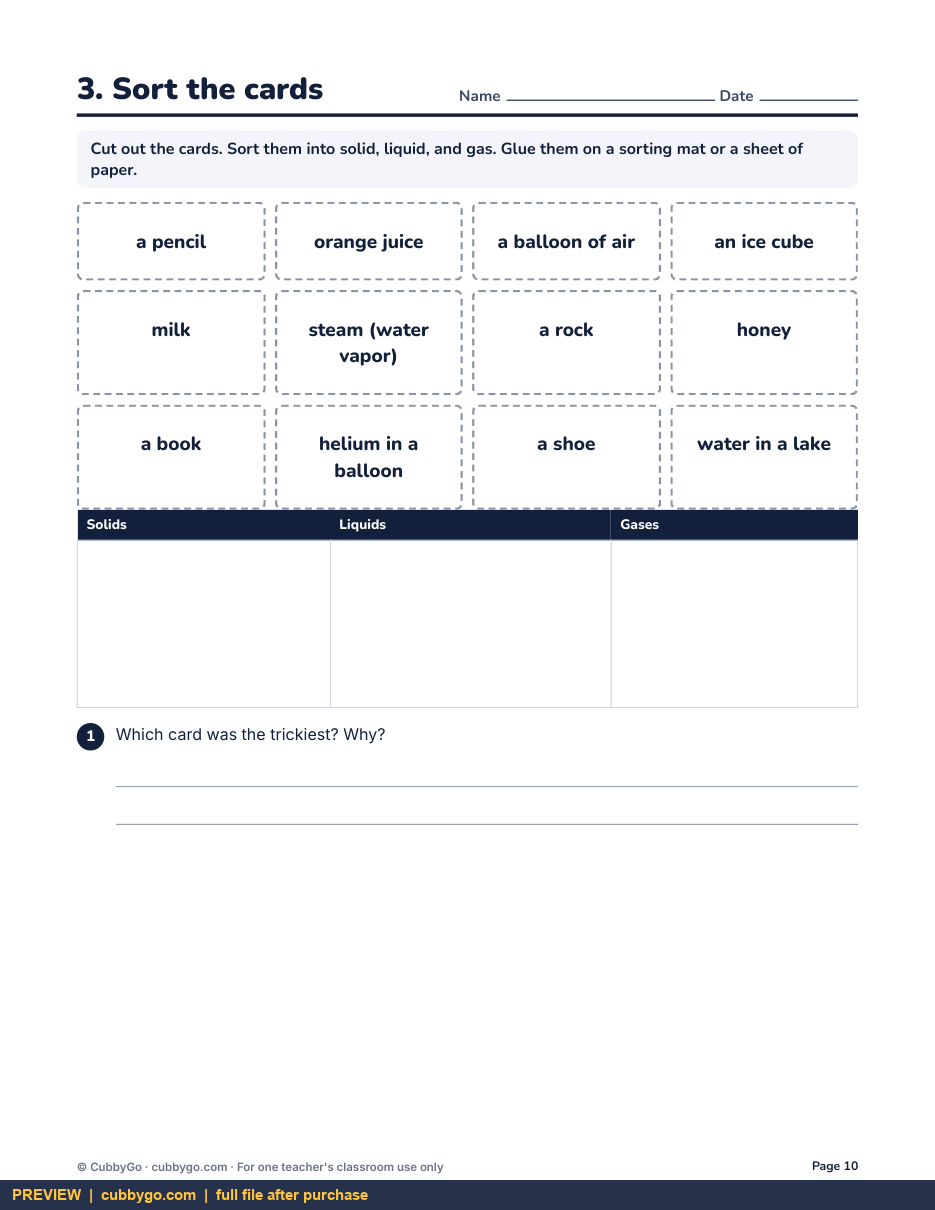
A complete three-day science mini-unit on solids, liquids, and gases. Students handle real materials, sort picture cards, run a three-station investigation, use particle pictures to explain why each state behaves the way it does, and explore melting, freezing, evaporation, and condensation.
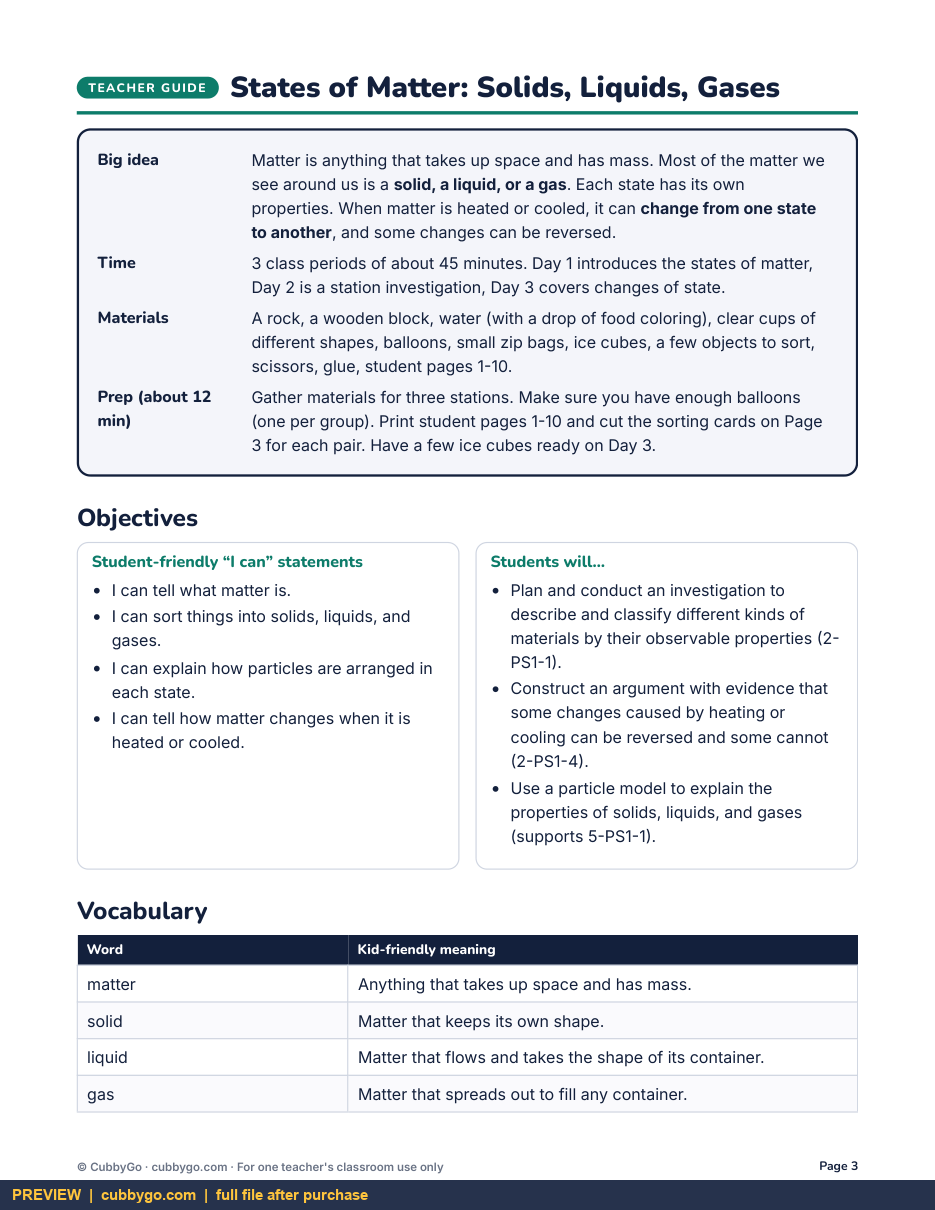
The Teacher Guide includes the full daily flow, notes on tricky examples (like sand and steam), common misconceptions, and next steps.
Works for grades 2-5 as an introduction or a review.
Why teachers use it
- Three days of hands-on science with simple materials
- Station investigation: solid, liquid, and gas
- Particle-model pictures and sentence starters
- Reversible vs. not reversible changes
- Accuracy notes for tricky examples like steam and sand
Questions
What grades is it for?
Grades 2-5. It aligns to NGSS 2-PS1-1 and 2-PS1-4 and supports the particle model in 5-PS1-1.
What materials are needed?
A wooden block, water, clear cups of different shapes, balloons, ice cubes, and scissors and glue.
Do students heat anything?
No. Melting is done with a sunny windowsill or a warm hand, so no heat source is needed.
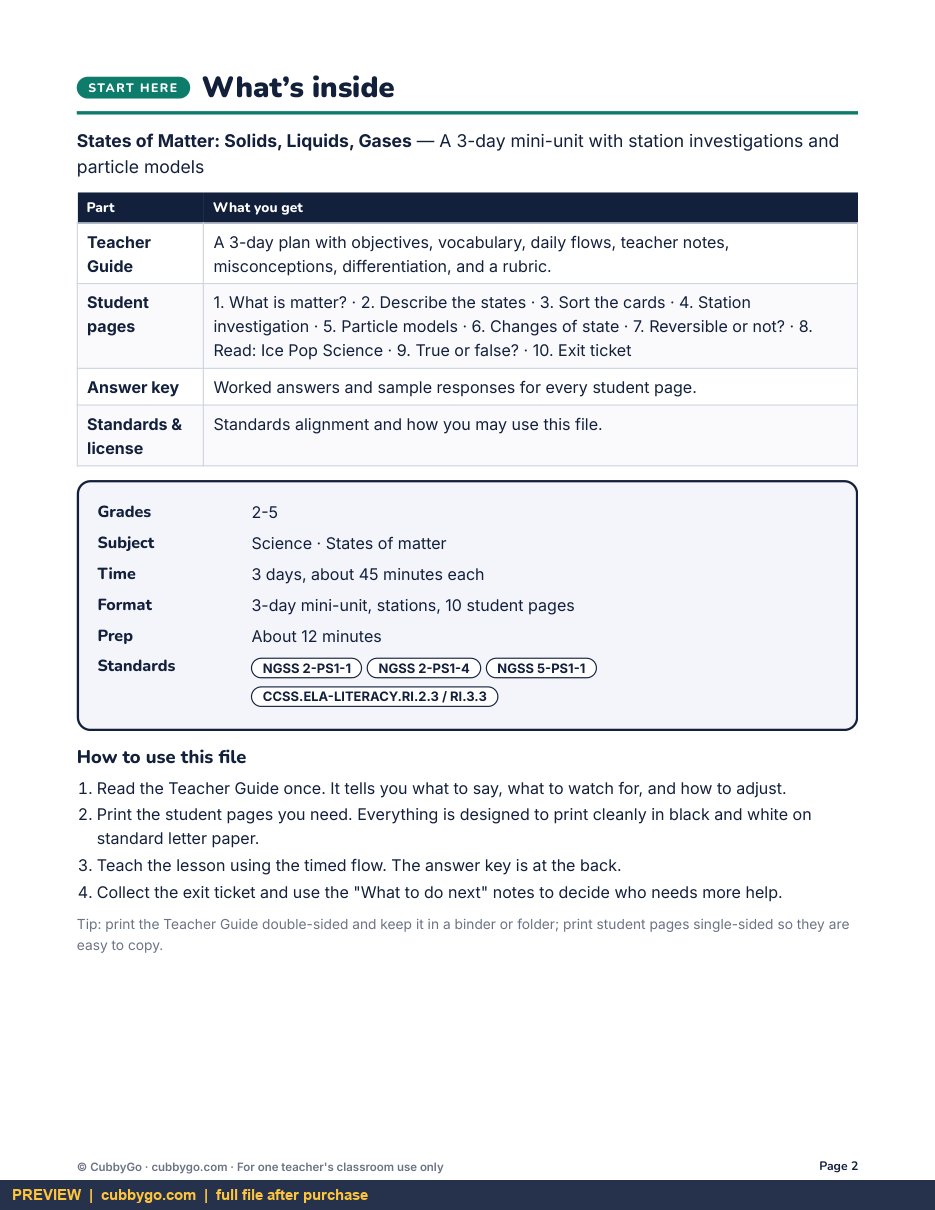
What’s inside
- Teacher Guide with three-day flow and rubric
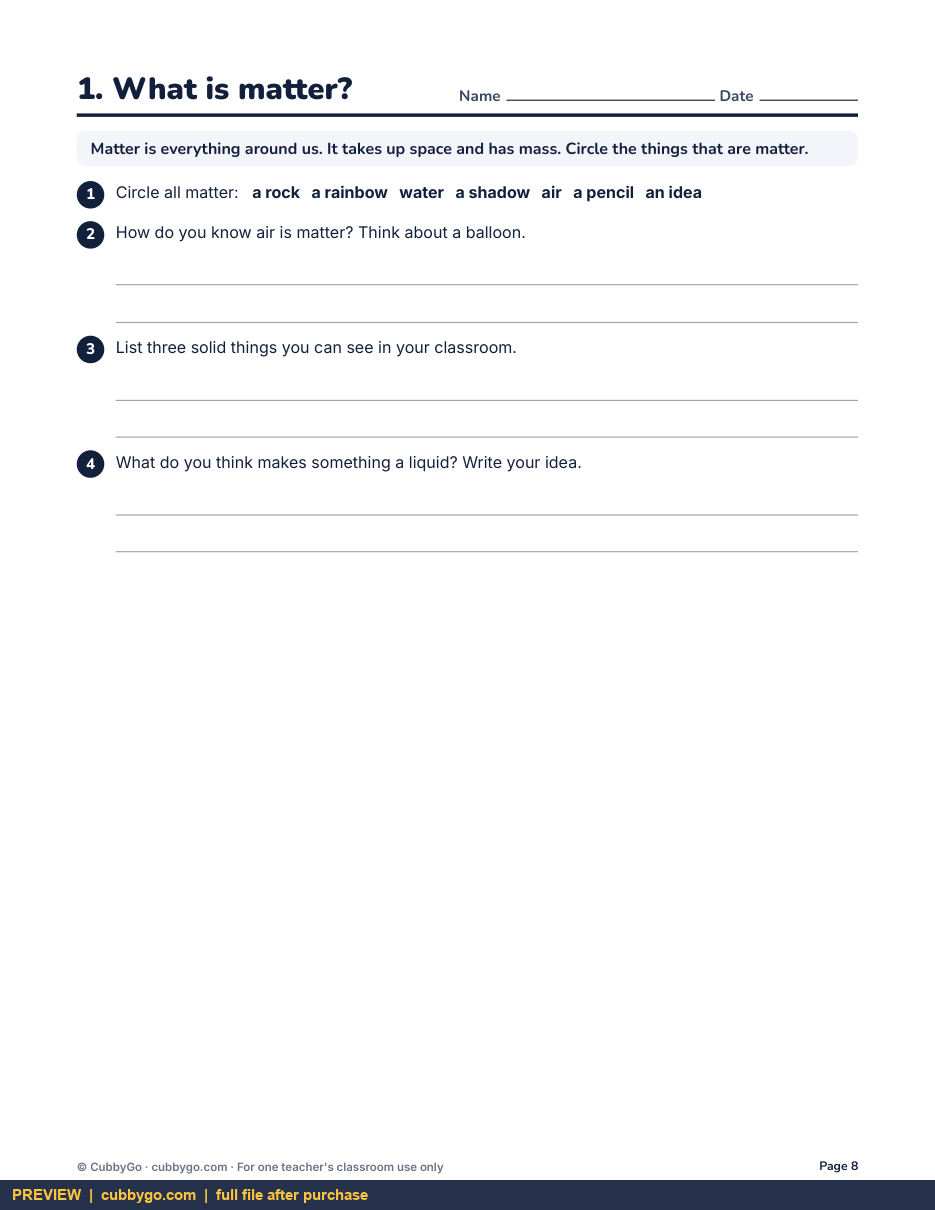
- Page 1: What is matter?
- Page 2: Describe the states
- Page 3: Sort the cards
- Page 4: Station investigation record
- Page 5: Particle models
- Page 6: Changes of state
- Page 7: Reversible or not?
- Page 8: Read “Ice Pop Science”
- Page 9: True or false?
- Page 10: Exit ticket (two versions)
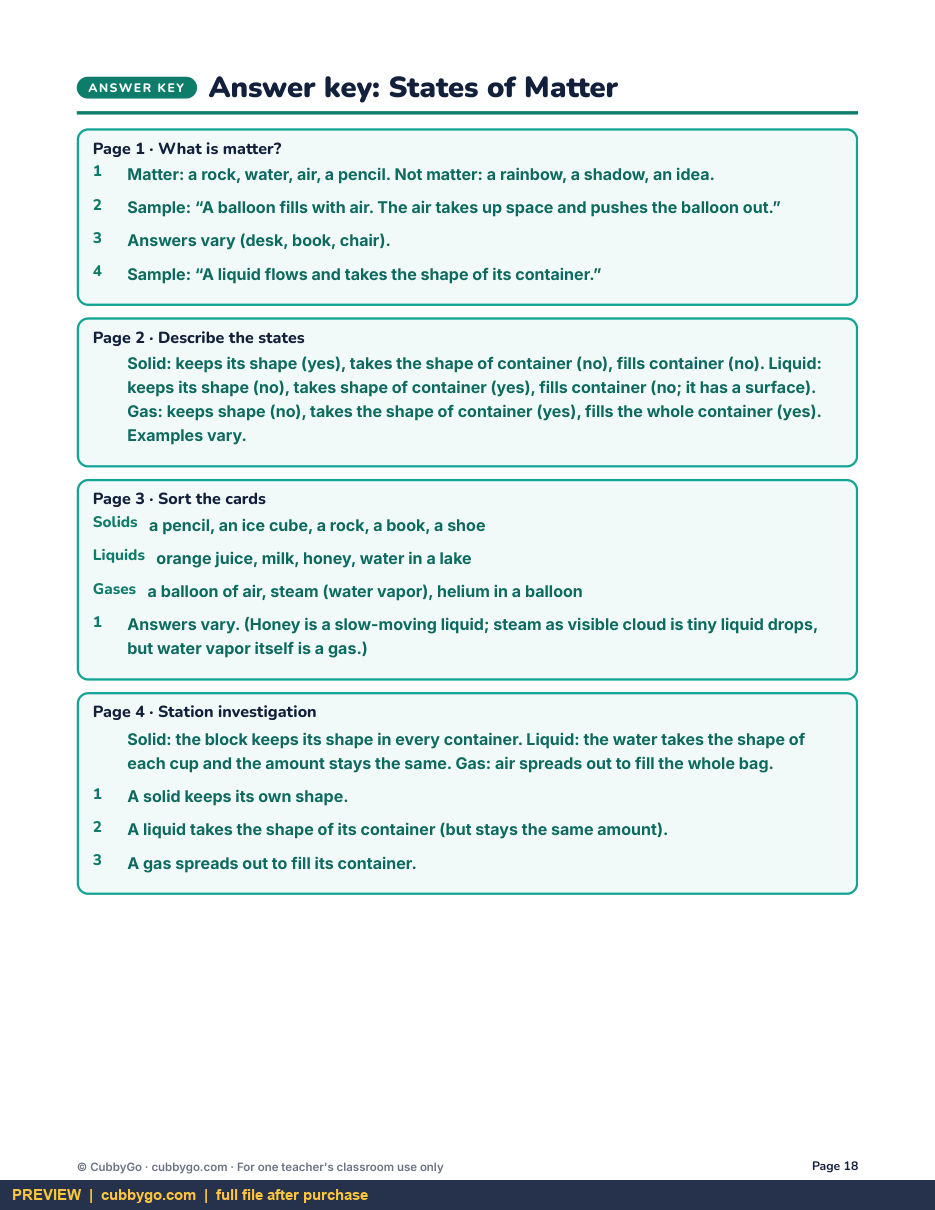
- Answer key and standards page
Standards
Always check your own state and district standards. These are the common standards this resource was written against.