Tap a preview page to see it larger.
How a Bill Becomes a Law: Mock Congress Simulation
Read, map, and role-play the legislative process
Instant PDF download · 20 pages · 843 KB. Print as many copies as you need for your own classroom.
Not what you expected? Full refund within 30 days.
About this resource
A complete civics lesson that takes students from reading about the legislative process to running their own Mock Congress. Students read an original passage, map the path of a bill, take on roles (sponsor, committee, House, Senate, President), and complete the forms for each step before reflecting on checks and balances.
The Teacher Guide includes three ready-to-use mock bills, accuracy notes on real numbers and rules, common misconceptions, differentiation, and a rubric.
No outside research is needed, and the topics are school-based so every student can take part.
Why teachers use it
- Active simulation that makes the process memorable
- Role cards, sponsor form, committee report, and vote tally sheets included
- Original reading passage and flowchart
- Accuracy notes for real numbers (435, 100, two-thirds, 10 days)
- Exit ticket and reflection for assessment
Questions
What grades is it for?
Grades 6-8 civics or social studies (C3 D2.Civ.4, D2.Civ.6, D2.Civ.8).
How many students do I need?
Any class size works. Small groups can share roles, and a large class can run two committees.
Can I use a real bill?
Yes, but the included school-based mock bills keep the focus on the process.
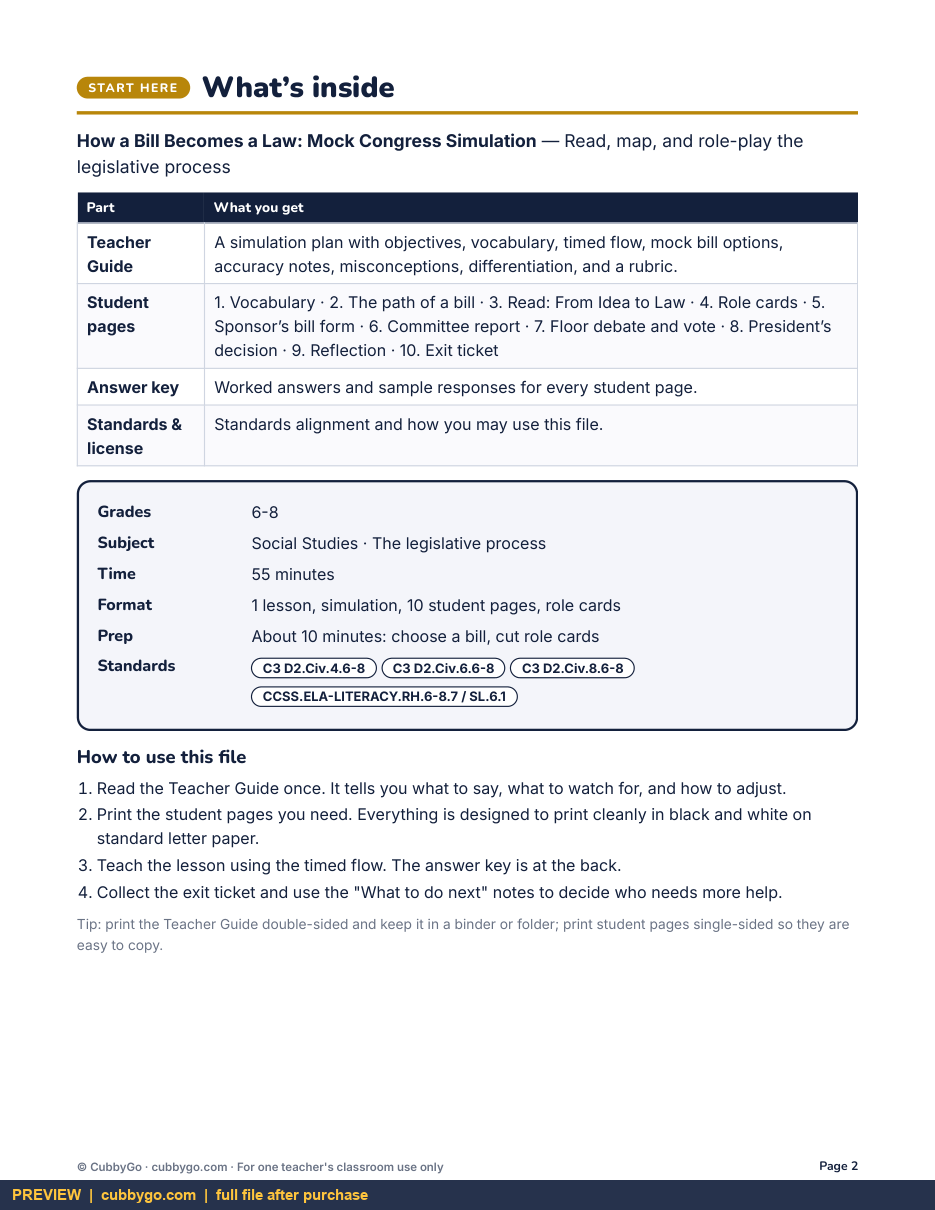
What’s inside
- Teacher Guide with mock bill options and rubric
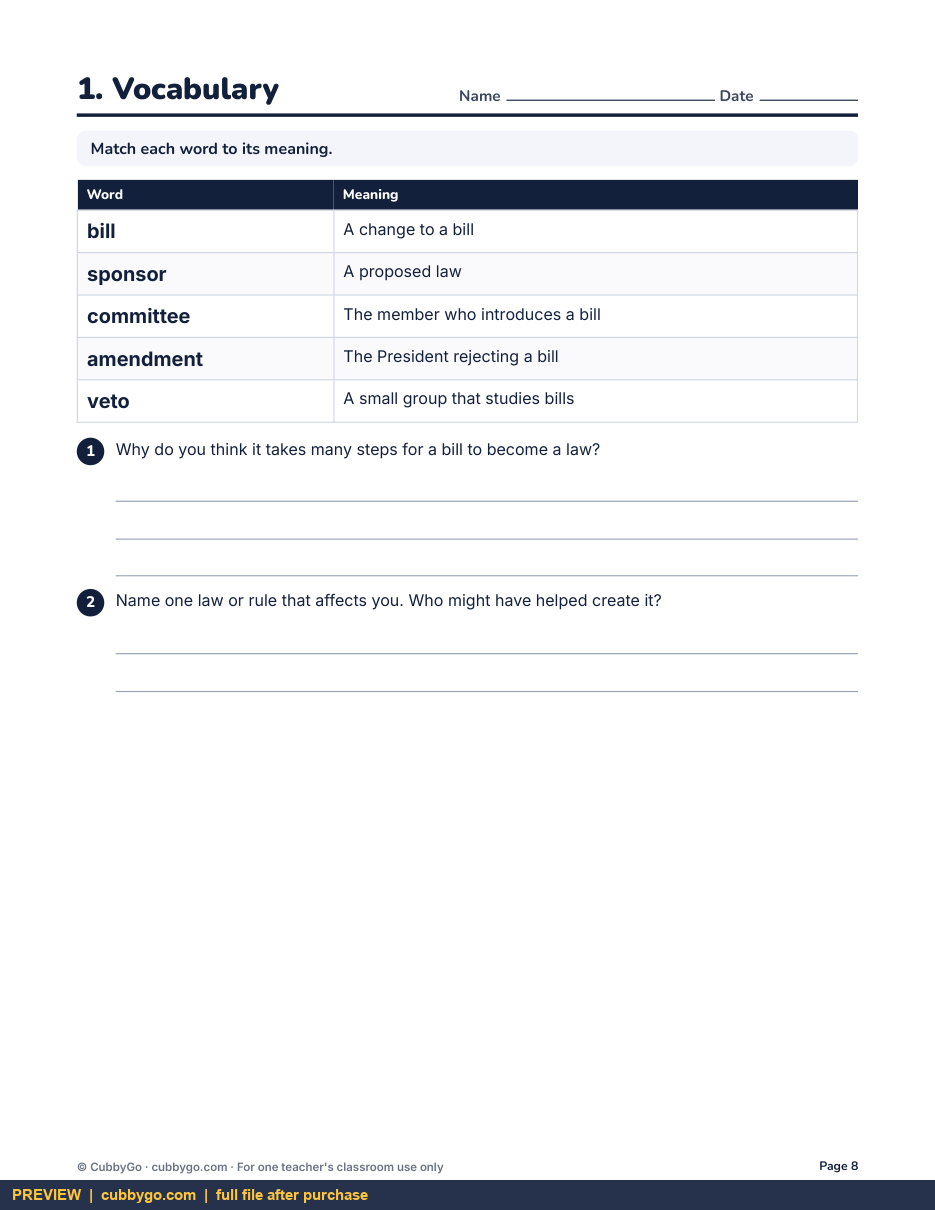
- Page 1: Vocabulary
- Page 2: The path of a bill (flowchart)
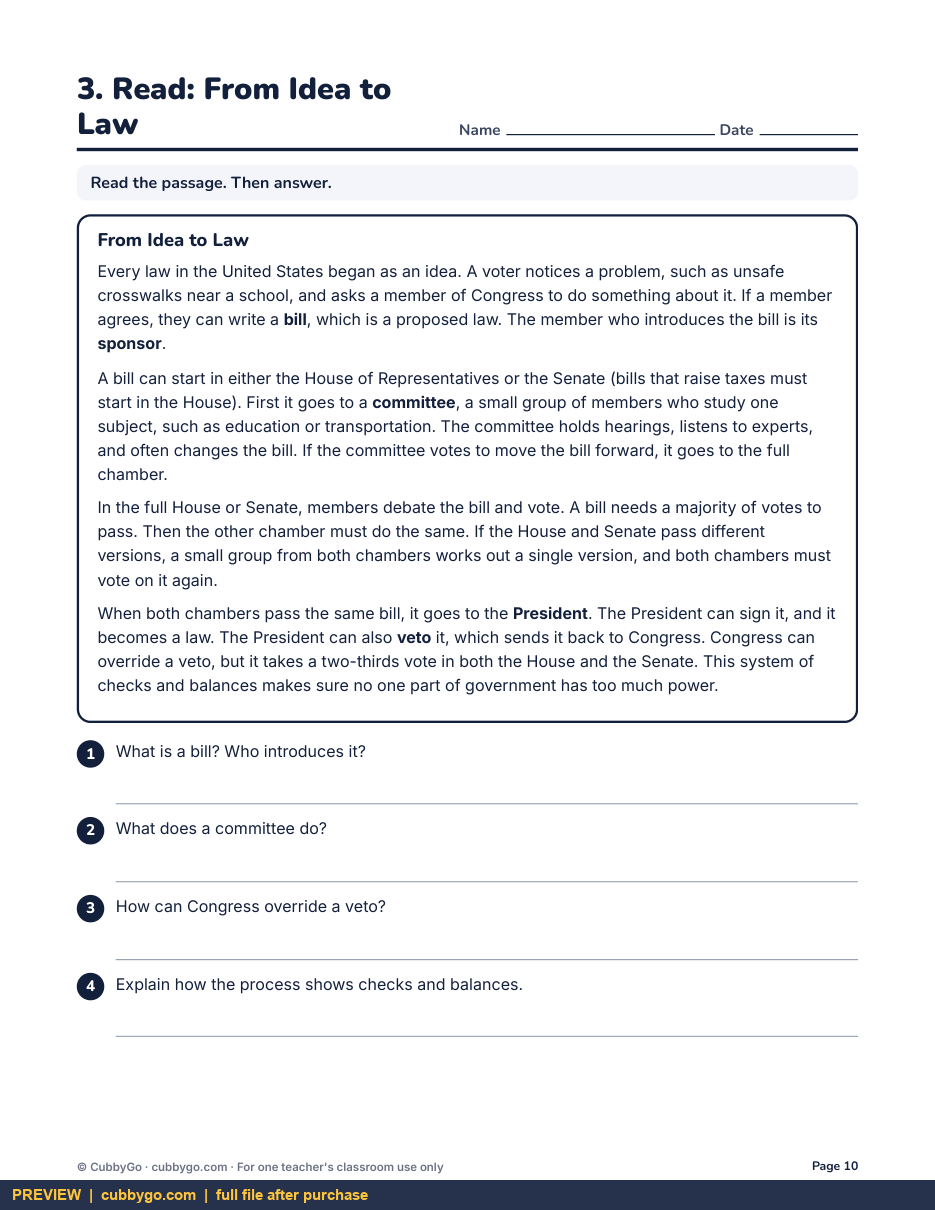
- Page 3: Read “From Idea to Law”
- Page 4: Role cards
- Page 5: Sponsor’s bill form
- Page 6: Committee report
- Page 7: Floor debate and vote tally
- Page 8: President’s decision and override
- Page 9: Reflection
- Page 10: Exit ticket (two versions)
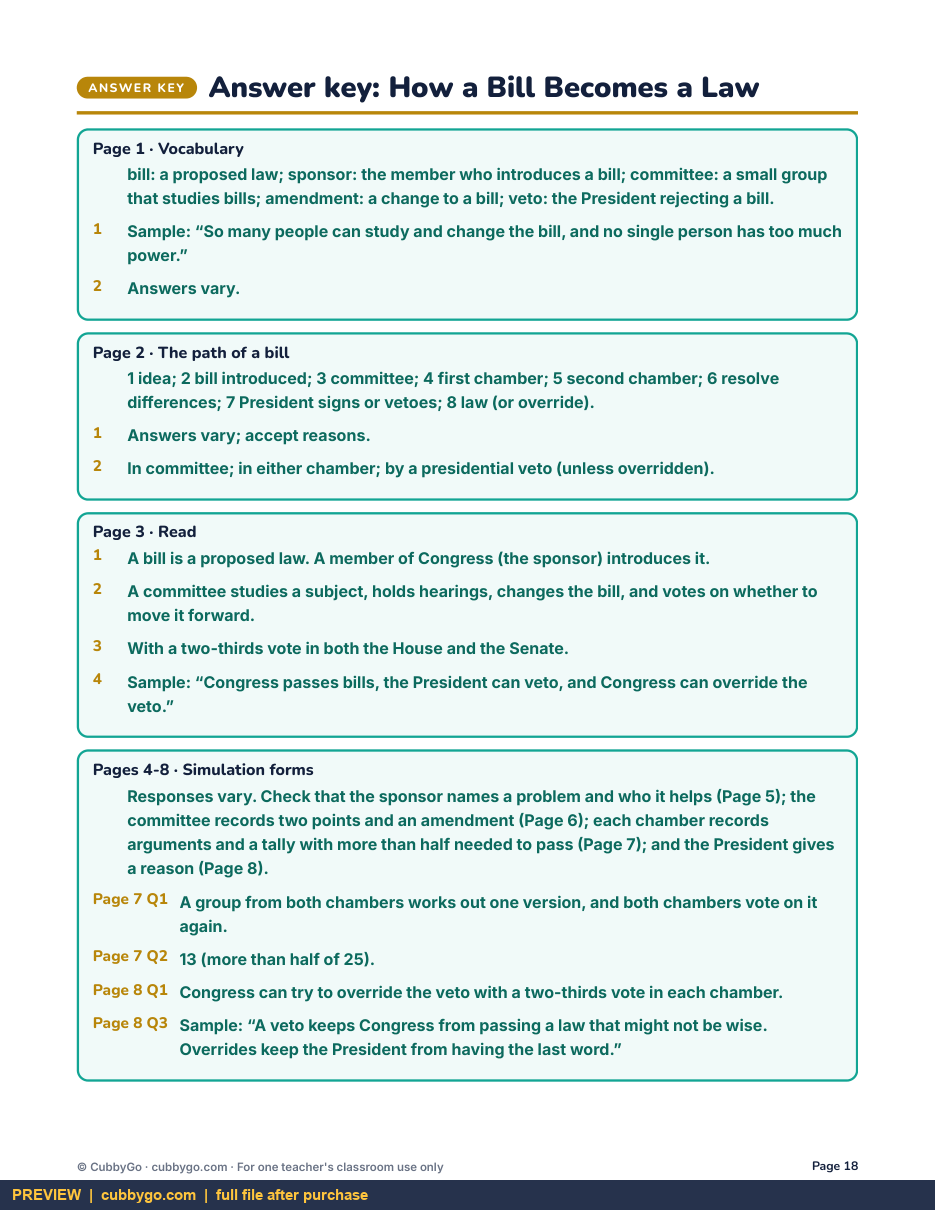
- Answer key and standards page
Standards
Always check your own state and district standards. These are the common standards this resource was written against.